
Let’s get straight to it. If you are thinking about launching a sports betting app, the first question on your mind is probably: how much will it cost me?
And honestly, it’s a fair question. The sports betting app development cost can vary a lot, from a few thousand dollars to well more than six figures. This range might confuse you, especially if you are just getting started.
So, to help you with the costs and everything that can confuse you, here is a simple breakdown. This blog will help you understand topics such as real pricing, what affects the cost, hidden expenses, types of sports betting apps, and how you can build effectively within your budget, and more.
How Much Does a Sports Betting App Cost to Develop?
Let’s begin with a short and straightforward answer:
- Basic app: $15,000 – $30,000
- Mid-level app: $30,000 – $80,000
- Advanced app: $80,000 – $200,000+
Yes, that’s a big range, and there’s a reason for it.
The real answer to “how much does a sports betting app cost to develop?” depends on what you are building and how advanced the app is. A simple MVP is very different from a full-scale betting platform, such as Bet365 or DraftKings.
Why Are People So Confused About Pricing?
- Agencies give vague estimates
- Developers throw around technical complexities
- Costs keep increasing mid-project
You don’t know what is actually necessary
Sounds familiar?
That’s because pricing is not just about building the app. It is about features, compliance, and security. And all of that adds up quickly.
Plan Your Sports Betting App Cost with Expert Guidance. —Talk to an Expert!
Contact Us
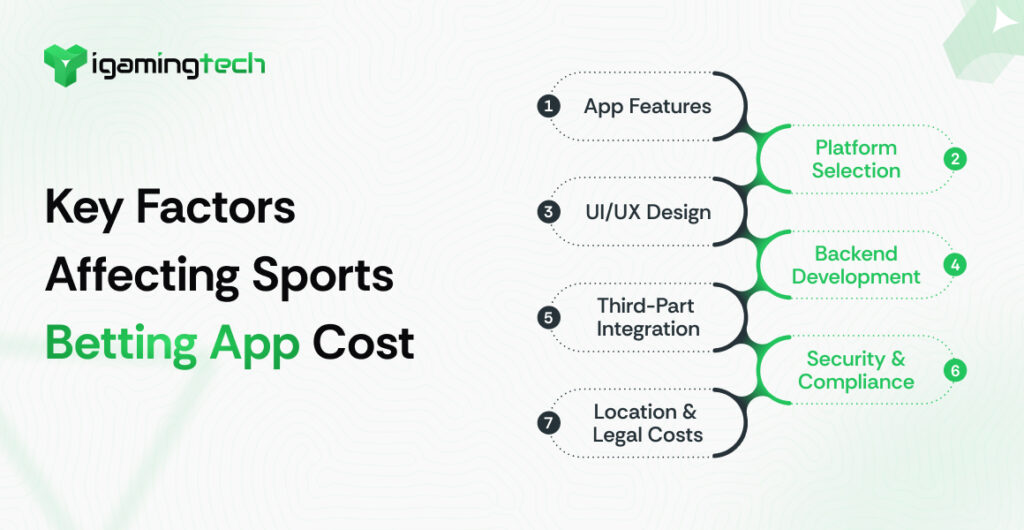
Key Factors Affecting Sports Betting App Cost
Here are the major factors affecting sports betting app cost, so you understand exactly where your investment goes.
1. App Features
This is the biggest cost driver. The more features you add, the higher the price.
Basic Features:
- User registration & login
- Simple betting interface
- Payment integration
- Odds display
Advanced Features:
- Live betting
- Real-time odds updates
- AI-based predictions
- Multi-language assistance
- Push notifications
Pro-level Features:
- Live streaming
- In-app chat/community
- Advanced analytics tool
- Crypto payments
- Responsible gaming controls
- Multi-currency support
Here you see, the difference between basic and advanced features can alone double your sports betting app development pricing. Advanced products may also include a sports betting prediction platform that processes historical and live event data.
2. Platform Selection
You have got three options:
- Single platform (iOS or Android): cheaper
- Both platforms are more expensive
- Cross-platform apps: cost-effective middle ground
If you are on a tight budget, opt for cross-platform (React Native or Flutter). It will reduce the overall cost of building a sports betting platform.
3. UI/UX Design
This is something that most people underestimate. Design matters a lot in a sports betting app. Why? Because users are dealing with real money, if your app looks confusing, they will leave instantly.
- Basic UI: $2,000 – $5,000
- Custom premium UI: $10,000+
Good design is not only about interface, it directly impacts trust and so thus conversions.
Backend Development
Backend development is like the engine of any application. It manages:
- User data
- Bets processing
- Odds updates
- Payment and wallet systems
A strong backend is non-negotiable. If somehow it fails, it will directly impact the app.
Backend can cost from $10,000 to $50,000 +, depending on complexity.
Third-Part Integration
You will need integrations in a betting app like:
- Payment gateways
- Odds providers
- Sports data APIs
- KYC verification
These services usually come with monthly or usage-based fees, which add to your long-term sports betting app development cost. An iGaming payment aggregator can connect several gateways and wallet systems through one payment layer.
Security and Compliance
This is huge. Betting apps deal with:
- Real money
- Sensitive user data
- Legal regulations
Therefore, you will need:
- Data encryption
- Anti-fraud systems
- Licensing compliance
Skipping this is not an option, and it can easily cost somewhere around $5,000 to $25,000 +. Review this sports betting app security checklist before finalizing identity checks and payment controls.
Location & Legal Costs
This one is also a major factor: legal compliance.
Different countries/states have different specific rules for sports betting apps.
You may need:
- Gambling license
- Legal consultation
- Geo-restrictions
And this can easily add up to $10,000, depending on your target market.
Hidden Costs No One Tells You About
Let’s be practical, most founders heavily focus on the initial phases of app development and completely undervalue what comes after launch. The reality is, your expenses don’t stop once your sports betting app goes live.
In fact, that’s when a new set of running costs begins. And if you are not prepared for them, they can quickly stretch your budget.
1. Maintenance & Updates (The Cost That Never Stops)
Once your sports betting app is live, it enters a continuous cycle of upkeep and maintenance. No matter how well your developers build it, bugs are unavoidable.
Real users interact with a betting app in unpredictable ways, and problems will start to appear. It can be a glitch, a delay in payments, or an error in odds updates. These are not just technical issues; in a sports betting app, even small bugs can lead to lost revenue and damaged trust.
Other than fixing issues, you also need to improve your app regularly to stay in the competition. The betting industry in 2026 is evolving quickly, and users expect updates regularly.
If your competitors integrate live betting, faster payouts, or even a better interface, your app will look outdated almost overnight. Thus, you need to invest in refining the design, adding new features, and improving performance.
Not to forget the backend here. Your databases, servers, and APIs need regular monitoring and firmware updates to stay efficient and secure. Without any proper maintenance, your sports betting app could slow down, crash during high traffic, or turn out to be vulnerable to security issues.
And for all of this, expect 15–25% of your sports betting app development cost annually.
So if your app costs $50,000 to build:
Maintenance will be $7,500 to $12,500/year
2. Marketing & User Acquisition (The Real Game)
Here’s the harsh truth:
- Building the app is the easy part
- Getting users is the expensive part
You can have the best app in the world, but if no one knows about it, it’s useless.
Thus, you should use paid advertising. Platforms such as Google, Facebook, and Instagram can bring in users quickly, but you have to spend a lot.
Here’s the catch:
- Betting keywords are expensive
- High competition = higher cost per click
So, to promote your sports betting app, influencer marketing is among the most prominent options. Collaborating with sports influencers or content creators can help you reach a more engaged and potential audience.
Then there are bonuses and promotions. These are almost unexpected, as users expect:
- Sign-up bonuses
- Free bets
- Cashback offers
Without these, the chance that users stay on your app becomes almost negligible. While these incentives are very effective in attracting users, you are basically paying users to join.
In several cases, founders realize that they end up spending almost as much as their development budget on marketing. That’s why it is very important to treat marketing as a core part of your budget, not an afterthought.
3. Server & Hosting Costs (Scaling Isn’t Free)
At the beginning, hosting and server costs may seem manageable. When a sports betting app has a small user base, it can be operated on basic cloud infrastructure without investing too much.
But, As your app grows, so do the demands on infrastructure. More users mean more data and more real-time updates. Operators should also learn how to optimize a sports betting app for peak match traffic before selecting the hosting setup.
In particular, sports betting apps need constant data flow for user activity, odds, and live scores. This ultimately puts pressure on servers, and you have to upgrade the infrastructure to handle it.
As you scale, a more powerful database is required to easily manage large volumes of data, and faster servers for smooth performance. You might also need to integrate advanced systems such as caching and content delivery networks to keep the app responsive, especially during major sports events.
What catches many app founders off guard is how rapidly these costs hike. What begins with $100-$500 monthly expenses can grow into thousands of dollars as your database increases. On top of that, there are additional expenses such as API usage fees, payment gateway charges, and data storage costs.
If your app becomes popular:
- Thousands of users will be online at the same time
- Real-time transactions
- Live betting pressure
Therefore, you will need:
- Auto-scaling infrastructure
- CDN (Content Delivery Network)
- Advanced caching systems
These can cost from $2,000 – $10,000+ per month.
Real-Life Cost Scenarios
Let’s make this practical and easy.
Scenario 1: Startup MVP
- Basic features
- Cross-platform
- Simple User interface
Estimated cost: $20,000 – $35,000
Development time: 3-4 months
Scenario 2: Growing Business
- Live betting
- Better User interface
- Multiple integrations
Estimated cost: $50,000 – $100,000
Development time: 5-7 months
Scenario 3: Enterprise-Level App
- Live streaming
- AI predictions
- Advanced security
- Multi-region support
Estimated cost: $150,000 – $300,000+
Development time: 8-10 months
Pro Tip (Save Yourself Money) – Explained in Detail
If there is one thing most app founders wish they knew earlier, it’s this: the biggest mistakes don’t happen during app development, they happen because of poor planning around it. These simple tips may look basic, but they can actually help you thousands in the long run.
1. Plan at Least 2x Your Development Budget for the First Year
Most people ignore it, but this is the most important rule.
When you get an estimate for the cost of building a sports betting platform, let’s say $50,000, it is easy to think, ‘Alright, I just need 50K, and I am good to go.’ But that’s not how it will actually work. That 50,000 dollars will only cover the development costs; it does not cover what happens after launch.
In the first year, you have to spend money on maintenance, upgrading features, fixing unexpected bugs, paying for APIs, and running servers. All of these costs stack up rapidly, and they are not optional.
That is why a safer and smarter approach is to assume that the first-year cost will be at least double the development cost. So, if you spend $50,000 on creating the app, you should be prepared to spend almost double on running and growing it.
This mindset or strategy will help you avoid that ‘oh no, we are out of budget’ moment that kills many startups in the early stages.
2. Start Small (MVP)
It has been seen that many app founders try to build the perfect app right from the beginning. They want to include features such as multiple payment systems, AI-based predictions, a fancy dashboard: everything.
The problem? It gets expensive quickly, and worse, you don’t even know if the users need all those features or not.
That’s where the idea of an MVP (Minimum Viable Product) turned out to be useful. Rather than building everything, you should only focus on the core and essential features that can actually make your sports betting app usable.
For a sports betting app, that might need a simple interface, basic betting functions, and secure payments, that’s all.
Starting small will help you launch faster and at a much lower cost. More importantly, it will give you an idea about the real market. Actual user feedback will also play an important role in determining the future requirements for regular updates.
3. Scale Only When You See Traction
Scaling too early is another common mistake. Founders generally assume their app will grow quickly. And this led them to invest heavily in advanced features.
But here is the reality: most sports betting apps don’t explode within a span of hours.
If you scale before you have real traction and users, you are basically spending money without proof that users are actually liking your app or not. Thus, once you start seeing regular activity and growth, you focus on scaling. Upgrade servers, add more features, and improve your marketing, but only when it makes sense.
4. Track Each Response From Day One
This might sound obvious, but it is something many people overlook.
When you are creating a sports betting app, money goes out in various directions. This includes designing, hosting, APIs, legal fees, and more. If you are not tracking these expenses correctly, it can lead to loss of control of your budget, especially in the early stages.
Small costs that look insignificant at first, such as APIs usage fees, monthly subscriptions, or minor changes in design, can add up over time. And tracking each response gives you clarity. You will know exactly about the overall sports betting app development cost.
It will also help you make better decisions, like cutting unnecessary costs or investing more in areas that are actually working.
Even a simple spreadsheet can make a huge difference. The objective is to stay aware and in control at all times.
How to Monetize a Sports Betting App (Simple & Real Talk)
Alright, so you have developed your app, now comes the real question: how do you actually make money from it?
If you are confused about this, as most of the founders assume that they will gain profits once the users start betting on their app. But monetization in a sports betting app is not just about one stream; in fact, it is the combination of smart strategies.
Let’s understand this simply and practically:
1. The Classic Way: Commission on Bets (Your Primary Revenue)
This is the most common and reliable way to make money out of your betting app. If your app is a traditional one, you build a margin into the odds. That small margin with time ensures that the platform earns profits consistently.
If you are running a betting exchange, it works differently. Users bet against each other, and the platform takes a small commission from each winning bet.
Either way, every bet placed on your app contributes to revenue generation. The key here is volume. Even the small commissions add up speedily when you have a large number of active users placing bets regularly.
2. In-App Ads (Extra Revenue Layer)
Ads are not the main source for revenue generation, but they can still add up to a decent percentage to your revenue.
You can use:
- Banner ads
- Sponsored content
- Partner promotions
For example, you can promote a sports brand, betting tips services, or other gaming apps.
But make sure not to overdo it. Too many ads can ruin the user experience and make your app feel spammy. Use it smartly to make it a steady secondary income stream.
3. Premium Features & Subscriptions
This is where things get interesting. Not all users are the same. Some are casuals and others are serious bettors who are willing to pay for better tools, features, and premium subscriptions.
You can offer premium features such as:
- Advanced betting analytics
- Expert tips or predictions
- Ad-free experience
- Faster withdrawals
- Exclusive betting markets
- Detailed player analysis
- AI-powered analytics & insights
Users will pay monthly or annually to access all these features. And this generates a recurring revenue stream, which is beneficial for long-term growth.
4. Affiliate & Partnerships Earning
Another way to monetize your sports betting app is by partnering with other platforms.
You can earn profit by:
- Referring users to other betting platforms
- Promoting sportsbooks or casinos
- Partnering with sports content platforms
Every time a user signs up through your referral, you earn a commission. And this works especially well if your app has strong traffic but limited betting features in the initial stages.
5. In-App Purchases & Virtual Credits
Some betting apps use a system of virtual credits or coins so that users can:
- Buy credits
- Use them to place bets
- Unlock features
This model is generally used in fantasy sports or casual betting apps. Moreover, it is a great way to monetize without directly managing real-money betting in specific regions.
6. Data Monetization (Advanced Strategy)
This one is more advanced but powerful if your platform scales. Your app collects valuable data like:
- User behavior
- Betting patterns
- Popular event or sport
This data, when anonymized correctly, can be used for:
- Market insights
- Partnership with analytics companies
- Improving your own platform
You are not selling data in a shady way; it is about using it to get insights and provide real value.
7. Transaction Fees
Another simple and effective method is charging small fees on transactions.
For example:
- Deposit fees
- Withdrawal fees
- Currency conversion fees
Even a small percentage per transaction can generate a good amount of revenue. Just make sure your fees are transparent; hidden charges can kill the user’s trust.
8. Sponsored Promotions & Events
As your app grows and becomes popular, other brands may want to collaborate with you.
And you can run:
- Sponsored tournaments
- Branded betting campaigns
- Special event promotions
For example, during a huge sports event, a brand might pay you to promote their campaign through your app. This adds another revenue stream while keeping the users engaged and active.
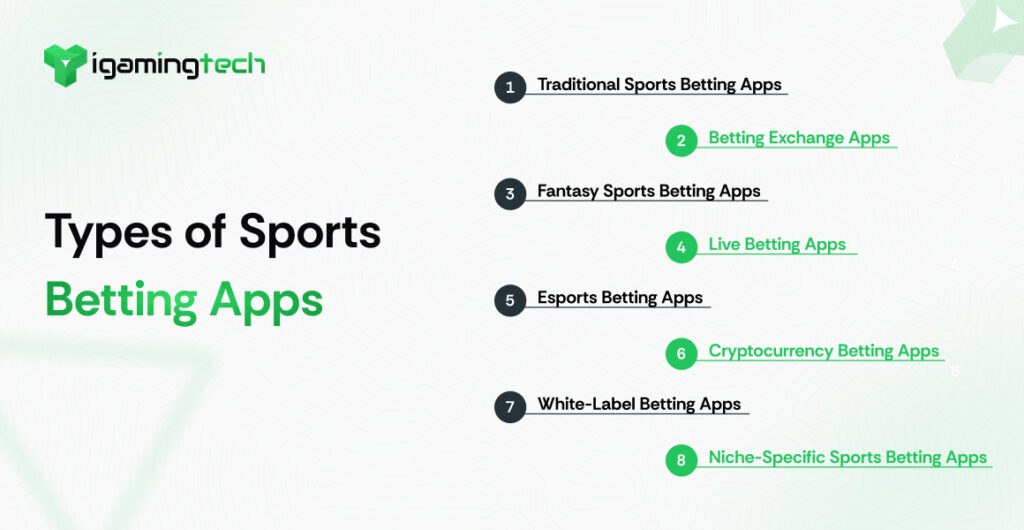
Types of Sports Betting Apps (Explained Simply)
If you are planning to build a sports betting app, one thing you need to figure out early is what type of betting app you actually want to make. Not all sports betting apps are the same, and choosing the wrong one can lead to wasted time, money, and effort.
Many beginners think it’s just a betting app, but in reality, there are various modes. Each mode is different in target audience, features, and costs. Let’s have a look at the type of betting apps to give you a clear shot.
1. Traditional Sports Betting Apps
Also termed as Classic Bookmaker, this is the most common type when it comes to sports betting apps.
In this model, users place bets directly against the platform. You manage the bets, set the odds, and make money via commissions and margins.
Apps such as Bet365 follow this model.
The good part? You will have full control over almost everything: odds, user experience, and profits. However, it is more complex to build and manage. To easily manage this model, you will need strong databases, risk management tools, and real-time data integration.
This model is more ideal if you want to build a long-term, scalable betting business.
2. Betting Exchange Apps (User vs User Betting)
This model works a bit differently. Instead of users placing bets against the platform, they bet against each other. Reliable sports betting exchange software must manage user liquidity and commissions alongside real-time odds.
The app acts as a middleman and earns profits through commission on each bet. The advantage here is lower risk. As users are betting against each other, you are not directly exposed to losses like in the bookmaker model.
However, it is harder to build initially. You need enough users to bet against each other; otherwise the system does not work properly. Liquidity is the biggest challenge here.
This model is the correct choice if you need a safer business model but are ready to invest in creating a strong user base.
3. Fantasy Sports Betting Apps
This is one of the fastest-growing models.
Instead of betting on match results, users make fantasy teams made up of real players. They earn points on the basis of the performance of players. Apps like Dream 11 follow this model.
The huge benefit? In various regions, fantasy sports are considered a ‘game of skill,’ which makes them easier to operate. These apps are very engaging and addictive at the same time. But they need solid UI/UX and real-time data syncing.
4. Live Betting Apps (In-Play Betting)
Live betting apps enable users to place bets during a live match. For instance, betting on the next goal, next wicket, or next point in a live match. This model is also very popular as it keeps users engaged for longer periods. It also increases the number of bets placed per user.
But here’s the highlight: it is technically demanding. You need ultra-quick data updates, real-time odds evaluation, and a strong backend to manage regular changes.
If done right, this can surely boost your profit while increasing overall development cost at the same time.
5. Esports Betting Apps
This is a newer model, but growing rapidly.
Instead of traditional sports, users bet on Esports such as CS: GO, FIFA tournaments, and Dota 2.
The users here are younger and engaged, especially in regions where Esports is extremely famous.
The advantage here is that it has less competition compared to other models. But you have to sum up Esports data providers and understand the gaming audience as well.
If you target the Gen Z audience, this one is a strong choice.
6. Cryptocurrency Betting Apps
Crypto betting apps allow users to deposit, bet, and withdraw in the form of cryptocurrencies like Bitcoin or Ethereum. These apps are becoming popular because they provide:
- Quick transactions
- Lower fees
- More privacy
These are generally popular in regions that have strict baking policies. But there are some challenges: you have to manage crypto wallets, regulatory uncertainty, and security risks. It is a bit more complex, but it can be an effective differentiator if built right.
7. White-Label Betting Apps
This model is the easiest one if you want to enter the market.
Instead of creating everything from scratch, you use a pre-built sports betting app and customize it with your branding. The biggest benefit is speed and cost. You can launch it within weeks, and the upfront investment is much lower.
The downside? Limited flexibility. You won’t have full access or control over features, and you will usually pay ongoing fees.
Startups can use white label sports betting software to reduce the MVP stage and launch faster.
8. Niche-Specific Sports Betting Apps
Instead of covering every sport, these apps only focus on a specific sport.
For example:
- Only cricket betting
- Only football betting
- Regional sports focus
The advantage here is targeting a specific audience deeply. You can have a loyal user base faster because your model will feel more specialized.
It is also less costly to build, and if you are starting with a limited budget, this model can be a smart move.
How to Develop a Sports Betting App (And What Tech You Actually Need)
Alright, so now you know the cost of building a sports betting platform, the types, and how to make money out of it. The next big question is:
- How do you actually build a sports betting app?
- And what technologies are required to make it work smoothly?
Developing a sports betting app needs a well-structured process. And things might get complicated if you are not technical. But don’t worry, here is the simple explanation.
Step 1: Start with a Clear Plan (Don’t skip this)
You need clarity before you think about coding.
So, ask yourself:
- What type of betting app are you looking to build?
- Who is your target audience/region
- What’s your core feature or model
This step might sound basic to you, but skipping this may lead to a waste of money. A lot of app founders jump straight into developing and realize, ‘Oh, we should have added this feature, or ‘users actually need something else.’
That’s how the budget explodes. So, take your time, define MVP, and stick to it.
Step 2: Design the User Experience (UI/UX)
Now this is the part that users actually see and feel. In a betting app, design is all about speed and enhancing user experience. If your app feels confusing, slow, or unprofessional, users may leave instantly.
So, your design should focus on :
- Simple navigation
- Clear betting flow
- Fast loading screens
- Clean and modern layout
This is where the use of wireframes and prototypes becomes important. You basically figure out how the app will look and operate even before developing it.
Step 3: Frontend Development (What Users Interact With)
Frontend is like the face of your app. It is the part that users tap, swipe, and interact with.
Common Technologies:
- React Native: Very popular for cross-platform apps
- Flutter: Great performance and cost-effective
- Swift: Perfect for iOS
- Kotlin: Used for Android Apps
If you are on a tight budget, go with React Native or Flutter. They enable you to build one app that will work on iOS and Android.
The frontend is responsible for:
- User interface
- Navigation
- Displaying tools
- Placing bets
And it has to be fast, smooth, and bug-free.
Step 4: Backend Development (The Brain of Your App)
Understanding the backend operations might be a complex thing. It handles everything behind the scenes.
The backend is responsible for:
- User accounts
- Wallets & Transactions
- Bets processing
- Odds updates
- Security
Common backend technologies:
- Node.js: Scalable and fast
- Python
- Java
- Ruby on Rails
And for databases, you can use PostgreSQL and MongoDB for structured data and flexible data handling, respectively.
The backend must be stable and powerful as sports betting apps deal with real-time data and users. Even a small delay can generate a serious issue.
Step 5: Integrate Sports Data & Odds
A sports betting app won’t generate match data on its own; it needs third-party providers.
These APIs will give you:
- Live scores
- Match schedules
- Real-time odds
- Player stats
Without all of these, your betting app simply doesn’t work. Popular platforms such as Bet365 include specialized companies such as Opta Sports for data feeds and analysis.
Step 6: Payment Gateway Integration
Since users are dealing with real money, payment gateways need to be smooth and secure.
And for that, you have to integrate:
- Credit/debit cards
- E-wallets
- Bank transfers
- Crypto
The key factor here is simple: you should provide options for fast deposits, smooth withdrawals, and strong security. If somehow users struggle to withdraw their money, they won’t trust your app.
Step 7: Security Implementation
Security implementation across your app features is a must.
As your app will handle:
- User data
- Financial transactions
- Betting activity
Thus, you need End-to-end encryption, secure authentication, an anti-fraud system, and data protection compliance. Even a single data breach can affect your reputation.
Step 8: Testing (Where Most Apps Fail)
The procedure for mobile app testing includes functionality, usability, and performance of your app. Testing before the launch will help you examine quality, user experience, compatibility, and security. Skipping this is not an option as it will not only improve the overall user experience but also eliminate the risks such as user dissatisfaction, resistance to change, and isolation of the platform.
Step 9: Launch & Development
Once everything is ready and testing is done correctly, it’s time to launch your app.
This includes:
- Publishing on App Store & Play Store
- Setting up servers (AWS, Google Cloud, etc)
- Analyzing overall performance
Launch is just the beginning, and you can now focus on better user experience, reliable outcomes, and re-modeling the features according to feedback or response.
Step 10: Post-Launch Improvements
After launching your sports betting app, you will start getting real user feedback.
And that can help you to:
- Fix issues
- Improve features
- Security regulations
- Add new functionality
- Scale your platform
Addressing these steps will reduce the level of usability problems, performance mistakes, and several other issues that can impact user experience.
Tech Stack Summary (Simple Version)
If you need a quick snapshot of the technologies required:
- Frontend: React Native / Flutter
- Backend: Node.js / Python / Java
- Database: PostgreSQL / MongoDB
- Cloud Hosting: AWS / Google Cloud
- APIs: Sports data providers
- Payments: Paypal, Stripe, crypto gateways
This combination is generally used in modern-day sports betting apps.
Build a Secure Sports Betting App Within Budget. —Schedule a Call!
Contact UsConclusion
According to industry reports, the global sports betting market was valued at more than $100 billion in 2024 and is expected to reach around $190 billion by 2030, growing at about 11% annually.
Therefore, developing a sports betting app is not just about using the right technology. It’s about making everything that can work together smoothly.
You don’t need the most expensive technology stack; you need a solid plan, a reliable development team, focus on user experience, and a strong backend for security. Most failures don’t happen because of wrong technology; they happen because of poor planning and rushed decisions. Sports betting app development cost
As you are now aware of the sports betting app development cost, thus partnering with a trusted and recognized sports app development company will let you set new goals and benchmarks for bettors across the globe.
Ready To Build Your Own Sportsbook Platform?
Launch a secure, scalable, and fully integrated sportsbook designed to grow your business faster.


