
Physical casinos rely on software to coordinate day to day gaming floor operations. Land based casino software development can connect slot monitoring with player tracking and loyalty systems. It can also link bonusing tools and table game systems with cage operations and cashless transactions. The system’s scope reflects the casino’s equipment and operating model.
Vendor choices and local regulations also shape it. A casino management system often serves as the umbrella for these capabilities. Its modules vary by vendor and deployment. Some casinos use one platform while others connect specialized products.
This guide covers key features and integration decisions. It also outlines implementation steps and criteria operators can use to assess a solution.
What Is Land Based Casino Software?
A land based casino management system collects and consolidates gaming activity data from connected equipment and applications. It can run as one vendor suite or connect separate applications with their own transaction records.
- Device interfaces: Gaming equipment sends meter readings and event messages through defined interfaces. Regulators may require approval for specific connections.
- Data validation: The integration layer maps device and property IDs. It checks timestamps and event codes before records reach accounting or reporting.
- Record ownership: Each connected application needs a defined system of record. Role based access limits who can edit records. Audit logs show who made each change and when.
- Regulatory scope: The system collects and audits gaming activity data. It treats slot monitoring and player tracking as separate categories. This is one jurisdiction’s model and not a universal product boundary.
Which Features Belong in Casino Management Software?
Module features are useful as they show what each Module collects data from and how Casino Workflow utilizes that data. The following Modules are categorized according to their roles in Operations.
Slot Accounting and Monitoring
Records machine meter readings and error states. Slot accounting totals activity by machine and gaming day. Once done, it compares them with accounting records. A mismatch can point to a delayed meter upload or an unrecorded adjustment. Staff can trace the difference to a machine and time period before closing the daily report.
Player Tracking and Loyalty
A casino player tracking system associates a patron’s card or account ID with rated play. Records can include the machine or table plus session time and rated amount. Rating rules use measures such as amount and frequency of play. A loyalty module can then update points or comp balances and retain a record of adjustments.
Bonusing
External bonusing applies promotion rules and records each award as a separate event. The record can include the player or session reference and the award value. Keeping it separate from base game meters helps finance identify promotional awards when reviewing accounting totals.
Planning a Land-Based Casino Software Project? —Book Your Free Consultation
Contact UsHow Casino Systems Integrate Across a Property
A player tracking system may close a session before the loyalty application updates the points. Integration rules help both systems match their records. They also define what happens when an update is delayed or rejected by the receiving system.
Match Records Across Vendors
Two applications may use different IDs for the same machine or player account. A maintained cross reference links those IDs to the property’s reporting ID. This lets staff match records without relying on display names or floor locations.
Apply Later Corrections
A receiving application may accept an event and then receive a correction. The integration should detail how to update the record without losing the history of the original transaction. It is also important that the user can recognize what application has made the update.
Recover Delayed Messages
An interface can hold a message until the receiving system is available. A delivery log should show if the message is still pending or was rejected. Staff can then check its status before retrying the transfer.
For a related online example of connected casino modules and back office tools, see the Slotocafe casino platform case study.
What Does Casino Management System Development Involve?
Casino management system development starts with the property’s equipment and daily workflows. Each stage should resolve a specific decision before the next one begins. Operators planning a custom build can hire casino software developers to define module and integration responsibilities.
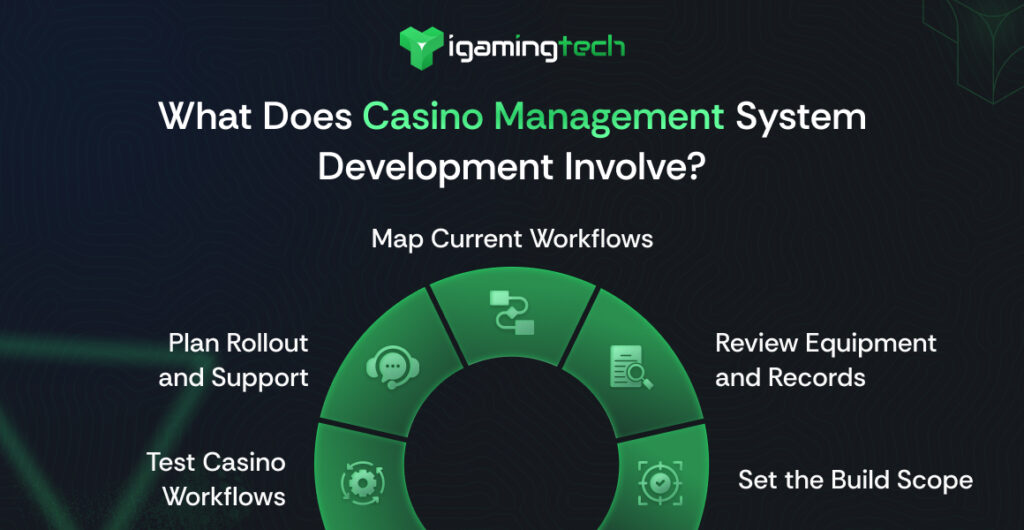
Map Current Workflows
Upon registration, the team sets the parameters for what information needs to be recorded and when the account becomes active. For promotional awards, the system identifies who can approve an exception. It also records why an award remains pending. These rules set clear conditions for system acceptance.
Review Equipment and Records
The equipment review classifies existing machines and applications into four groups. These are retain, upgrade, adapt, or replace. A vendor supported upgrade or adapter may allow existing equipment to work with the planned system. Equipment that fails to meet the requirements may need replacement. It may also be excluded from the first release.
The migration review identifies which active player or financial records the new workflows need. Older history may remain in a read only legacy application if reporting and retention needs allow it. Missing history can limit trend comparisons and make past transactions harder to investigate.
Set the Build Scope
An existing CMS can be configured when its supported settings meet the property’s requirements. A third party module may fit a specific gap when its vendor supports the connection and provides the needed data. A custom component may be needed when neither option meets an operational requirement. It also adds code that the property must maintain through future updates.
The first release should cover the workflows required for planned operations. Optional reporting changes can follow. A capability tied to an approval condition cannot be deferred.
Test Casino Workflows
Integration testing checks that transaction records match across connected applications. For example, a cashless transfer should show a consistent amount and final status in both the player account and the gaming device. Casino staff then run user acceptance tests against the agreed criteria. GLI lists system integration testing and user acceptance testing as separate testing services.
Where local rules require independent testing or regulator approval, those are separate release gates. In Pennsylvania, CMS interfaces with slot machines and related systems are subject to testing and approval. A test result alone does not establish regulator approval.
Plan Rollout and Support
The first live area should use compatible equipment and have staff available to verify normal operations. Before cutover, the team records initial balances and determines how transactions already in progress will be completed. Staff should validate critical workflows before the rollout expands to additional gaming areas.
Security Testing and Regulatory Requirements
Security controls for a land based casino management system define who can access and change each record. Test evidence shows what was reviewed and which system version was tested.
Access and Audit Controls
Casino operations staff need access to floor tasks. The finance department requires access to the accounting records. Administration controls system configurations. Vendor support gains temporary access after the employee’s authorization.
Audit logs should record the account used and the time of each privileged change. They should also identify the setting or record affected. This gives reviewers a clear trail without repeating the transaction correction process.
Failure Recovery and Incident Evidence
An outage that stops audit logging can leave a gap in the records. The system should flag the gap and protect existing logs from changes. Staff should confirm that logging has resumed once the service is restored.
For unauthorized changes or system errors, incident records should preserve relevant logs, configuration snapshots, timestamps, and investigation findings. This should include an explanation of why it failed and what records are required for investigation.
Compliance Test Evidence
The compliance file should identify the software version and equipment model. It should also record the tested configuration and scope. Keep test results with defect findings and evidence that required fixes were retested.
A specific example includes Pennsylvania, which mandates that all interoperability testing documentation be submitted for any system that falls under the state’s scope. However, the documentation should include the product name, manufacturer, model, and software version.
Testing Certification and Regulatory Approval
These are distinct processes that answer different queries. Internal testing ensures the system fulfills project requirements, whereas independent laboratory testing is done when the relevant jurisdiction requires it. Regulatory approval is another process that is distinct from these two.
A laboratory report or certificate documents the testing performed. It does not automatically grant regulatory approval. Pennsylvania places certain casino management system interfaces with slot machines and related systems within a defined testing and approval process.
Jurisdiction and Standards
The operator must identify the regulator and system category before choosing the applicable requirements. Gaming industry standards are not automatically legal requirements in every jurisdiction. The operator should confirm which standard and version local rules or approval conditions reference. GLI maintains a catalogue of technical standards that can be checked against those requirements.
How to Choose a Development Approach
An operator can extend the current CMS, add a specialist module, or build a custom component. The decision depends on what the property needs and how much control it wants over future changes.
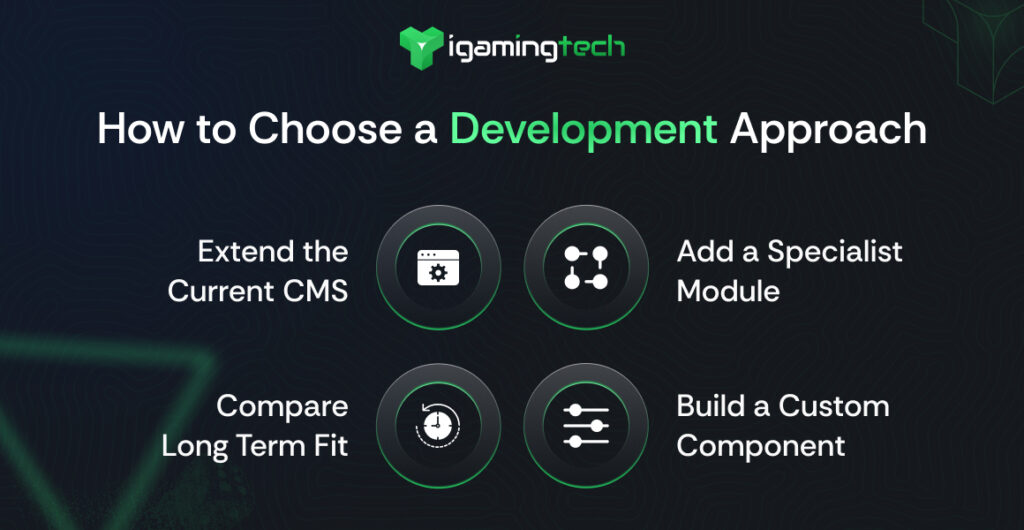
Extend the Current CMS
This approach fits when the existing product can support the workflow through configuration or a vendor developed change. Configuration usually keeps the work within the vendor’s supported product. A vendor change may add the needed function, but its timing and future updates depend on the vendor’s roadmap.
Add a Specialist Module
A separate module may suit a need that the core CMS cannot handle well. Problems can arise when an issue affects both products. One vendor may manage the module while another manages the CMS. The support agreement should clearly state who will investigate and resolve these issues.
Build a Custom Component
A custom component fits when supported configuration and available modules cannot meet an operational requirement. The operator should confirm that the needed equipment protocol and vendor documentation are available. Restricted access can block development or leave the component dependent on a vendor adapter.
Custom software gives the property more control over the required function. The property also takes on responsibility for maintenance and testing after future equipment or CMS changes.
Compare Long Term Fit
The initial development fee does not show the full cost. The operator should include upgrade work and ongoing vendor support in the comparison. Exit terms matter too. The property should know which records can move if it replaces a supplier.
A discontinued product or major upgrade can disrupt floor operations. The operator should check how each approach handles that change and who leads the response when two suppliers are involved.
The right choice meets the casino’s operating requirements while keeping future changes and support responsibilities manageable.
Need a Custom Casino Software Solution? —Let's Talk
Contact UsWhat Affects Casino Management System Development Cost and Delivery Time?
Project estimates depend on the equipment and records already in use. The work also depends on how connected workflows behave. Some factors add development work while others delay access or limit when changes can happen.
Legacy Equipment
Undocumented machine protocols require technical discovery before an adapter can be scoped. An adapter adds software work. An equipment upgrade or replacement adds procurement and floor coordination.
Module Dependencies
Module count alone does not show the full effort. Player tracking may set eligibility for loyalty points while a bonusing application uses the same status to issue an award. Shared rules and edge cases add design and testing work.
Vendor Resources
The team may need API specifications and test credentials. It may also need an equipment simulator or vendor engineering support. Delayed access can pause development or extend defect investigation.
Historical Data
Migration may include player accounts and loyalty balances. It may also include historical gaming reports. Incomplete records or inconsistent identifiers require cleanup and checks before converted data can be accepted.
Testing Requirements
Casino staff need time for user acceptance testing. Their availability affects the project schedule. Independent laboratory testing or regulatory review can add separate steps when required for the system and jurisdiction.
Live Floor Windows
Installation may need to fit within approved maintenance periods. A phased launch can require extra cutover support. Running old and new systems in parallel can also add coordination time.
A useful estimate needs defined equipment and module scope. It should also account for vendor response times and data condition. Testing obligations and available floor windows can affect the schedule.
Final Thoughts
Land based casino software development should be assessed against the property’s equipment and operating workflows. Before choosing a platform or custom component, the operator should confirm compatibility and access to required records. The operator should also identify who will maintain each connection and which testing or approval steps apply. These checks help determine whether the proposed system fits the casino’s needs and can be supported after launch.
Ready To Build Your Own Sportsbook Platform?
Launch a secure, scalable, and fully integrated sportsbook designed to grow your business faster.


