

Building a horse racing betting app requires more than attractive screens and a simple bet slip. The app must process changing race data and live odds while keeping wagers accurate and account balances consistent. It also needs reliable connections for payments, race results, and betting systems. Android and iOS add another layer because each platform has different technical and distribution requirements.
Successful horse racing betting app development starts with clear decisions about the target market, betting model, and data sources. Those choices shape the architecture. They also influence feature scope, compliance requirements, and overall cost. This guide explains the development process in practical terms. It shows which decisions should come first so operators can plan the app around real racing workflows instead of treating it like a generic sportsbook.
What Must Be Decided Before Building a Horse Racing Betting App?
A development team should define the operating model before horse racing app development starts. Early decisions affect data requirements, betting logic, and compliance scope. They also influence development time and future operating costs.
Target Market and Jurisdiction
The business should first decide where the app will operate. Gambling laws and licensing requirements differ across jurisdictions. The selected market can affect age verification, geolocation rules, and responsible gambling controls.
This decision should come before technical planning. Building first and checking regulatory requirements later can create expensive changes.
Pari-mutuel or Fixed Odds Betting
The betting model shapes the core wagering logic. Pari-mutuel betting places eligible wagers into a shared pool. The final payout depends on the pool after betting closes.
Fixed odds betting gives the bettor a stated price when the wager is accepted. The system must manage those prices and betting exposure.
Some businesses may need one model. Others may plan a combination based on their target market and racing offering.
Racing Coverage
The team should also define the racing content before development begins. Key decisions include:
- Domestic or international races
- Number of supported racecourses
- Pre-race or live betting
- Required wager types
- Race data coverage
- Live streaming requirements
Clear decisions at this stage give betting app development for horse racing a stable foundation. Businesses planning a broader sportsbook can also review sports betting app development services to understand how racing can fit within a wider betting product.
Essential Horse Racing Betting App Features
The right feature set should make race discovery and wager placement simple for bettors. It should also give operators enough control to manage betting activity and transactions. Strong horse racing betting app features should reflect real racing workflows instead of copying a standard sportsbook interface.
Features for Bettors
Bettors need quick access to racing information before placing a wager. The app should make key data easy to understand on a mobile screen.
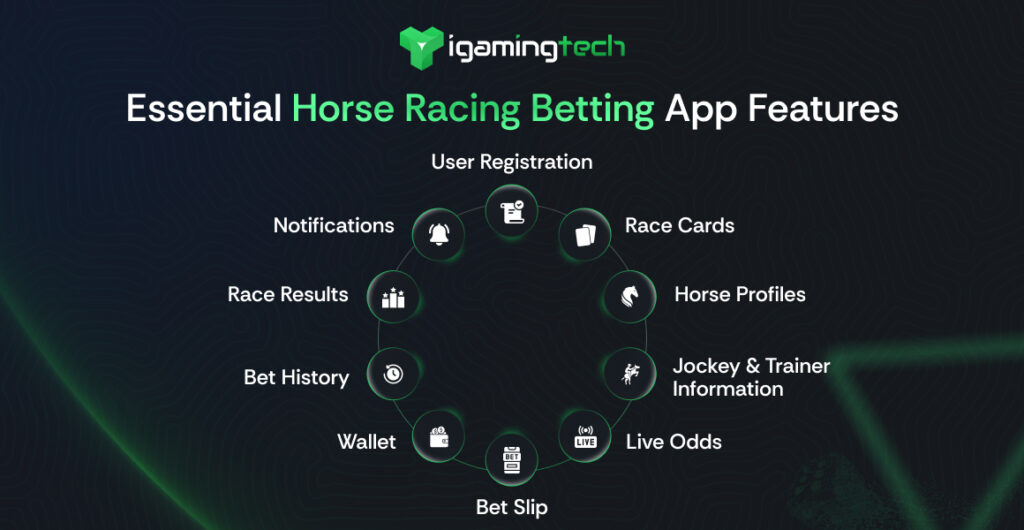
- User registration: Bettors can create accounts and manage personal details.
- Race cards: Users can view upcoming races and race times.
- Horse profiles: Profiles can show recent form and useful racing information.
- Jockey and trainer info: People placing bets can see information that affects the analysis of the race.
- Live odds: The odds may change depending on betting.
- Bet slip: People placing bets can place their bets and check stakes.
- Wallet: People placing bets can see available money.
- Bet history: Users can track open and settled wagers.
- Race results: Results should appear quickly after official confirmation.
- Notifications: The app can send race reminders and bet status updates.
Horse Racing Specific Wagering Features
Horse betting app development must account for wager types that are specific to racing. A basic product may begin with Win and Place wagers. More advanced products can add Exacta, Trifecta, and Superfecta betting.
Multi-race wagers may also be required depending on the target market. The betting interface should clearly show selections, stakes, and possible wager combinations. It should also respond correctly when a horse is scratched before a race.
Operator Controls
The better interface is only one part of the product. Operators need a secure administration area to manage day-to-day activity.
Important controls can include:
- User account management
- Bet monitoring
- Race management
- Transaction review
- Settlement controls
- Withdrawal review
- Reporting tools
- Responsible gambling controls
- Account restriction management
The final feature scope should match the betting model, target jurisdiction, and expected racing coverage. This approach keeps horse racing betting app features relevant to the actual product instead of adding functions that increase complexity without serving a clear operational need.
Build a Scalable Horse Racing Betting App —Talk to Our iGaming Experts Today!
Contact Us
Android and iOS Development Options
The mobile development approach affects performance, maintenance, and future updates. A business should choose it according to product complexity and launch scope. Betting app development for horse racing can use native development or a cross-platform framework.
Native Android Development
Kotlin is widely used for native Android development. A native Android app gives the development team direct access to Android features and device capabilities. This approach can suit products that need deeper platform integration or complex mobile functionality.
Native iOS Development
Swift is used to build native applications for Apple devices. Native iOS development gives the team direct control over iPhone specific functionality and application behavior. It can be useful when the product needs extensive integration with Apple technologies.
Cross-Platform Development
Cross-platform development allows one development project to share much of its code across Android and iOS. Flutter and React Native are common frameworks for this approach.
This option can reduce duplicated development work when both mobile platforms need similar functionality. Some platform-specific functions may still require separate Android or iOS development.
| Factor | Native Android | Native iOS | Cross Platform |
| Main technology | Kotlin | Swift | Flutter or React Native |
| Codebase | Android specific | iOS specific | Largely shared |
| Platform access | Direct | Direct | May need native integration |
| Maintenance | Separate Android work | Separate iOS work | More shared maintenance |
| Best fit | Android-focused products | iOS-focused products | Similar apps across both platforms |
There is no single development approach that fits every horse racing betting app. The team should consider feature complexity, platform requirements, and available development resources before choosing the technology.
Core Architecture and Third-Party Integrations
A horse racing betting app depends on several connected systems. These systems must exchange accurate data with minimal delay. Poor integration can affect race information, wager processing, and settlement. The architecture should therefore define how each external service connects with the betting application.
Race Data Integration
Race data feeds supply the information shown before and during an event. The application may need data for:
- Race schedules
- Racecourses
- Horses and runners
- Jockeys and trainers
- Race status
- Scratched horses
- Official results
The development team should also plan how the application will react when racing data changes close to the start time.
Odds and Tote Integration
A tote system receives wagers and manages pari-mutuel betting pools. Applications using pari-mutuel wagering may need to connect with a tote provider so bets and pool information can move between both systems.
Fixed odds products need a different workflow. They require reliable odds delivery and wager validation before a bet is accepted.
Payment and Wallet Integration
The wallet should record deposits, withdrawals, and wager activity. Payment services must connect with the wallet without creating balance mismatches. Transaction records should also remain available for operational review.
Live Streaming Integration
Live streaming can improve the race day experience. It is not essential for every product. Streaming rights and provider availability should be confirmed before adding it to the development scope.
API Integration
APIs can connect racing data, tote services, payments, and results with the mobile application. A clear integration plan gives horse racing app development a more reliable technical foundation. It also makes future provider changes easier to manage.
Horse Racing Betting App Development Process
A structured process keeps technical work aligned with the betting model and target market. Horse racing betting app development should move through clear stages. Each stage should solve a specific requirement before the team moves forward.
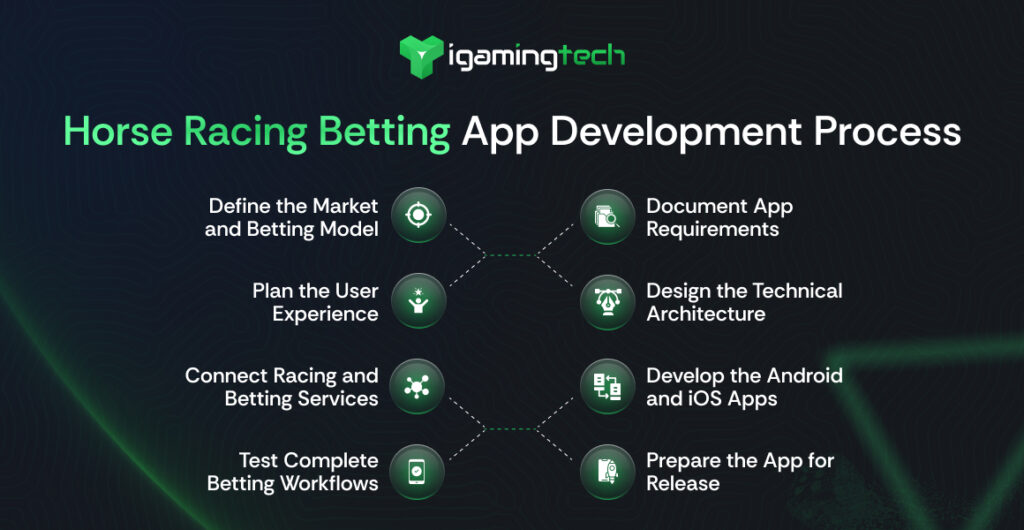
1. Define the Market and Betting Model
The team should confirm the target jurisdiction and racing coverage first. It should also select pari-mutuel betting, fixed odds betting, or a suitable combination. These choices establish the foundation for later development.
2. Document App Requirements
The team should define user roles, wager types, and required racing data. It should also identify payment methods, operator controls, and compliance requirements. A clear requirements document reduces unnecessary changes during development.
3. Plan the User Experience
Designers should map how bettors find a race, review runners, select a wager, and confirm a bet. The interface should keep these actions simple on smaller mobile screens. Important information should remain visible without making the betting journey feel crowded.
4. Design the Technical Architecture
The development team should map the mobile applications, backend systems, and database structure. It should also define how wagers, wallet activity, and race information will move between connected systems.
5. Connect Racing and Betting Services
Developers can then connect the required race data feeds, tote services, and payment providers. Each integration should handle updates reliably because racing information can change close to post time.
6. Develop the Android and iOS Apps
The team can build the approved screens and betting workflows for both operating systems. Development should follow the selected native or cross-platform approach. Backend development can progress alongside the mobile applications.
7. Test Complete Betting Workflows
Testing should cover more than individual screens. The team should test the complete journey from account access through bet placement and settlement. It should also confirm wallet updates, race data changes, and failed transaction handling.
8. Prepare the App for Release
The final stage includes production configuration, release preparation, and operational checks. The team should confirm that required integrations and compliance controls work correctly before users receive access.
A phased process gives betting app development for horse racing clear checkpoints. It also makes problems easier to identify before they affect later development stages.
How Much Does a Horse Racing Betting App Cost?
The horse racing betting app cost can start around $20,000 to $50,000 for a basic Android and iOS product. A more advanced app can require a much larger budget. The final investment depends on product scope, betting complexity, and external integrations. Businesses should treat these figures as planning benchmarks rather than fixed prices.
Main Factors That Affect Development Cost
Several decisions can increase or reduce the final budget.
- Platform choice: Building for both Android and iOS requires more work than launching on one operating system.
- Development approach: Separate native applications may require more development effort than a shared cross platform codebase.
- Betting model: Pari mutuel betting and fixed-odds betting need different wagering logic.
- Race data: Real time schedules, runners, and results require reliable data connections.
- Tote integration: Pari-mutuel products may need connections with external tote systems.
- Live streaming: Video integration can add technical work and ongoing provider costs.
- Payment systems: Deposits and withdrawals require secure payment integrations.
- Compliance functions: Identity checks and location controls can increase implementation scope.
- Operator tools: Advanced reporting, user management, and settlement controls add backend work.
These factors make it difficult to estimate horse racing betting app cost by counting screens alone.
Initial Cost vs Ongoing Cost
The budget should also separate development expenses from operating expenses.
| Initial Development Costs | Ongoing Operating Costs |
| Product planning | Racing data feeds |
| User interface design | Cloud infrastructure |
| Android and iOS development | Maintenance |
| Backend development | Third-party services |
| Integrations | App updates |
| Testing | Streaming services |
| Release preparation | Compliance operations |
A realistic budget for horse betting app development should account for both categories. Businesses comparing a broader sportsbook budget can also review this guide to sports betting app development cost for additional planning factors.
Launch Your Horse Racing Betting Platform —Start Your Betting App Project Today!
Contact UsSecurity Compliance and Responsible Betting Requirements
Security and compliance should be integrated into the plan during horse racing betting app development. The exact requirements depend upon the targeted jurisdiction. It is important that the team confirms the gambling laws of the targeted jurisdiction in order to decide how the application verifies the users and handles their bets.
Know Your Customer Checks
A betting app may use KYC checks before allowing certain account or payment activities. The required verification process should match local regulations.
Anti Money Laundering Controls
AML controls are designed to detect suspicious financial activity. Operators may need transaction monitoring and review procedures based on the rules that apply in their market.
Responsible Gambling Controls
The app may need tools that give users greater control over their betting activity. These can include:
- Deposit limits
- Betting limits
- Session controls
- Self-exclusion options
- Account restrictions
- Responsible gambling information
Account and Transaction Security
The development team should also protect account access, payment activity, and sensitive user data. Authentication controls and secure data handling should form part of the technical design.
Businesses that need deeper technical guidance can review this sports betting app security checklist. It covers broader security considerations without repeating them inside this guide.
For betting app development for horse racing, the key principle is simple. Compliance requirements should shape the product before launch rather than being added after development.
What Should Be Included in the First Version?
The first release should focus on the functions required to create a complete betting journey. A Minimum Viable Product (MVP) is the smallest practical version of an app that includes the core features needed for launch and early validation.
For horse betting app development, the first version should prioritize reliability over feature volume.
Core Features for the First Release
A practical first version can include:
- User registration and account management
- Identity and age verification
- Race cards and schedules
- Horse and runner information
- Essential wager types
- Live odds or pool information
- Bet slip and wager confirmation
- User wallet
- Deposits and withdrawals
- Bet history
- Race results
- Basic notifications
- Operator management controls
- Required responsible gambling controls
These functions allow users to move through the main journey from account creation to race selection and bet placement and settlement.
Features That Can Be Added Later
Advanced functions do not always need to enter the first release. The development roadmap can introduce them after the core betting experience is stable.
Later additions may include advanced race analytics, personalized recommendations, and prediction tools.
Final Thoughts
Horse racing betting app development starts with the right planning. The betting model, target market, and racing data requirements should be clear before development begins. A strong first version should focus on reliable betting, secure transactions, and essential compliance controls. Advanced features can be added later as the product grows.
Ready To Build Your Own Sportsbook Platform?
Launch a secure, scalable, and fully integrated sportsbook designed to grow your business faster.


