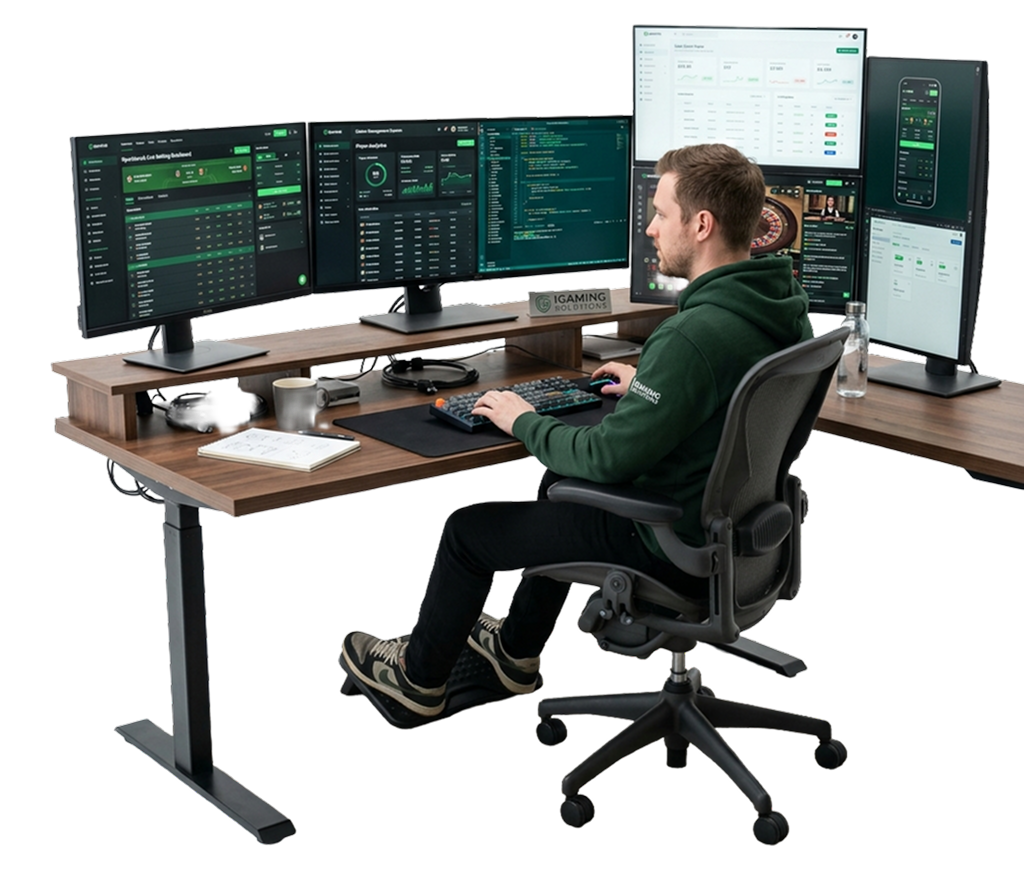
Businesses can hire sports betting software developers to build new sportsbooks or improve existing platforms. iGamingTech offers 8+ years of iGaming experience, supporting betting engines, live odds, wallets, backend systems, mobile interfaces, operator tools, and integrations. Each engagement begins with a scope and architecture review to define suitable roles and technical responsibilities.
Businesses can use remote sports betting software developers when an internal backlog needs betting-specific engineering capacity. The work can focus on the product stage where technical progress has slowed.
New Product Engineering
Developers take ownership of approved development work and manage dependencies between modules before release testing begins.
Existing Platform Extension
New functions can be added within the current architecture without replacing services that already support daily operations.
Isolated Module Rework
A defined component can be updated when latency or outdated reliances affect the wider platform.
Provider Integration Backlog
Developers handle data mapping and callback validation while defining responses for failed provider requests.
Release Continuity
The team manages planned updates and unresolved defects when internal resources remain focused on live operations.
Betting businesses need developers who can move quickly without losing control over the product. Our team brings practical sportsbook knowledge across live markets, wallets, payments, and risk workflows. This gives businesses focused support for building and scaling betting platforms.
Assign defined engineering workstreams to sports betting software developers based on the current platform gap. Each service covers a clear technical boundary so changes remain easier to test and review.
Betting Engine Development
Developers build the logic that receives a wager request and checks market status. The engine can also validate the offered price and stake before sending the transaction to the player wallet.
Provider data is normalized before it reaches the betting engine. This work covers event mapping and market identifiers. It also aligns price formats and update states across web and mobile channels.
Settlement logic connects verified event results with open bets and wallet updates. The workflow also needs defined handling for void markets and corrected results before a final balance change is recorded.
Wallet development connects bet placement and settlement with balance changes. Each transaction state needs to remain traceable when a wager is accepted or rejected. The same control applies when a result is settled.
Payment services connect deposit and withdrawal requests with the sportsbook wallet. Developers align provider responses with transaction states so pending or failed requests do not create an incorrect player balance.
Know Your Customer (KYC) verification links player status with account access. Developers can connect verification results with deposit permissions and withdrawal checks. Restricted accounts remain blocked from selected actions.
Risk systems calculate exposure from accepted wagers across markets. Operators can use defined thresholds to review concentrated liability and restrict further activity when a market exceeds its permitted exposure.
Admin and agent panels separate daily tasks through role-based permissions. Approved staff can review players and markets. They can also inspect transaction status without receiving unrestricted access to sensitive controls.
Reporting services combine wager data with settlement and wallet records. This helps operations teams trace mismatches between accepted bets and recorded balance changes before financial reports are finalized.
Web and mobile interfaces connect market selection with the bet slip and account state. Developers also define how the interface responds when prices change, or a market closes before confirmation.
Selected services can be updated without rebuilding the complete sportsbook. Developers isolate the affected component and review its dependencies before replacing outdated logic or resolving a performance bottleneck.
Testing covers module behavior and integration responses before release. Quality assurance teams can simulate rejected wagers and provider failures. They can also review wallet updates under higher transaction demand.
Bring Focused Expertise to Your Sportsbook Platform
Identify the module or integration that lacks development coverage. The next discussion can stay focused on the required specialty and expected level of involvement.
Our sports betting developers support businesses across betting, gaming, and digital sports markets. We build solutions that fit those business goals with better speed and long term scalability.
Sportsbook operators need platforms that support smooth betting flows, odds display, and strong backend control. Our developers help build products that improve platform performance and support daily betting operations with greater efficiency.
Online casinos often add sportsbook features to expand user engagement and strengthen platform value. Our developers help build sportsbook modules that align well with existing casino systems and player journeys.
Fantasy sports businesses need engaging products that keep users active across contests, leagues, and match cycles. Our developers help create platforms that support competition, user retention, and deeper sports based interaction.
Early stage betting startups need the right technical support to launch without unnecessary delays. Our developers help shape MVP products, validate market interest, and prepare the platform for long term expansion.
Large betting businesses often manage multiple brands, markets, or user segments at once. Our developers support these enterprises with scalable solutions that improve control, consistency, and long term platform expansion.
Our Portfolio
Platform Modules
What to Prepare Before You Hire Sports Betting Software Experts
Before businesses hire sports betting software developers they need a clear record of the current platform state and required work boundaries. These inputs help identify suitable roles without assuming that every sportsbook requires the same team.
Platform State
State whether the work involves a new product or a live codebase. For an existing system, identify the current stack and active modules.
Change Boundary
List the areas that can change and those that must remain untouched. Include known reliance between the requested work and existing systems.
Provider Dependencies
Identify the odds, payment, identity, and data providers affected by the work. Check if the required documentation and test access are available.
Internal Ownership
Confirm who handles product decisions, architecture questions, provider coordination, and release approval within the operator’s team.
Delivery Priority
Separate release-critical work from later improvements. Include known defects and target dates when they affect the required team capacity.
Access Requirements
Identify the repository, environment, and technical documentation access needed for assessment. Share sensitive credentials only through approved channels after authorization.
Our Step-by-Step Sports Betting Software Development Process
Once the roles and engagement model are defined, the sports betting software development process moves through five technical stages. Each stage covers a different part of delivery without repeating the hiring decisions explained above.
01
Scope Review
The review separates a new sportsbook build from changes to an existing platform. It identifies the modules and external integrations included in the engagement.
02
Platform Planning
Technical planning defines how the agreed work connects with existing betting logic, wallet flows, and operator tools.
03
Development and Integration
Developers implement the agreed modules with the selected technologies. Provider connections are added when they form part of the approved scope.
04
System Testing
The completed functions are checked within the connected betting flow. Testing covers stability, performance, and interface behavior before release.
05
Launch and Support
Final checks take place before deployment. Post-launch work can include updates, fixes, and later improvements covered by the support scope.
Technology Expertise of Our Sports Betting Software Developers
Our developers work across modern web, mobile backend, and platform technologies to build scalable digital products. This broad expertise helps businesses choose the right tools for custom development while enabling faster delivery.
ReactJS
NextJS
VueJS
NuxtJS
Node.js
NestJS
Laravel
Python
Adyen
Crypto Wallet APIs
Skrill
MongoDB
PostgreSQL
ClickHouse
Mysql
Sportradar
Evolution
Pragmatic Play
Genius Sports
Ezugi
Betfair Exchange API
AWS
GitHub Actions
Cloudflare
Kubernetes
Terraform
Microsoft Azure
Docker
Roles You Can Hire for Sports Betting Software Development
Role selection begins with an uncovered delivery responsibility rather than a standard staffing template. In online sports betting software development the right specialist depends on where work is blocked across interface states, service logic, integrations, and releases.
Frontend Developers
Add this role when browser screens do not reflect odds changes, market suspensions, or backend responses without a page reload.
Backend Developers
This role fits changes to wager validation, settlement logic, wallet states, or service behavior under simultaneous requests.
Mobile App Developers
Mobile specialists handle native authentication, secure device storage, and notification behavior as well as Android and iOS release requirements.
UI and UX Designers
User interface and user experience specialists define what users see after price changes, rejected bets, failed deposits, or interrupted sessions.
QA Engineers
Add this role when provider updates or cross-module changes create regression risks that manual checks cannot cover consistently.
DevOps Engineers
This role fits releases that require environment parity, automated deployment, monitoring alerts, or a tested rollback path.
This role coordinates internal teams and external providers when shared dependencies have separate acceptance dates and approval owners.
Our Models for Hiring a Sports Betting Software Developer
Select an employment model suitable for your project, budget, and delivery timeline. A proper arrangement will help organizations work quickly and foster teamwork.
Dedicated Developers
This model works best for businesses that need focused technical support over a longer period. It is ideal for teams that want to hire dedicated sports betting software developers for daily collaboration and want full attention on platform growth.
Part-time recruiting is a good strategy for companies looking for help without having to commit to a full-time staff. Part-time recruiting can work well for upgrading features, fixing bugs, improving products, and achieving other objectives of a company looking to hire sports betting software experts.
Full time developers are a strong choice for businesses that want consistent output across the full project cycle. This model supports faster execution, better team alignment, and deeper product involvement for companies that want to hire sports betting software developers for long term delivery.
This model is ideal for businesses with a fixed scope and clear delivery goals. It works well for MVP builds, redesigns, feature modules, and focused development tasks that need a defined timeline and structured execution.
Key Features Our Sports Betting Developers Deliver
Hire dedicated sports betting software developers to build features that keep users engaged and platforms ready for growth. The right feature set improves betting experiences and gives operators better control.
01
Live Betting
Enable real time wagering during ongoing matches with quick market updates and smooth bet placement.
Why Hire Dedicated Sports Betting Software Developers
A dedicated team fits sportsbooks with an ongoing backlog or several planned releases. The team retains context on earlier architecture decisions and active dependencies. This reduces repeated onboarding when work moves between product development and production support.
Sports betting platforms need more than basic software skills. They require knowledge of betting flows, odds logic, user behavior risk controls, and platform scalability. A specialized team helps reduce mistakes and build a product that fits the betting market better.
They can build sportsbook websites, mobile betting apps, admin dashboards, wallet systems, and many other advanced features. They can also support custom platforms, MVP builds, and white label based projects.
Custom software is built around specific business goals, features, and workflows. White label software is prebuilt and faster to launch, but offers less flexibility. The right option will depend on your project needs and the delivery timeline. Businesses can also review our custom vs ready made sports betting software guide before selecting the right launch model.
A dedicated model works best when the platform needs ongoing development, frequent updates, or long term support. It is a strong option for businesses that want better focus, stronger collaboration, and steady product progress.
Yes. Remote developers can support sportsbook projects across planning, design, development, testing and launch. This model gives businesses access to wider talent while keeping delivery flexible and scalable.
An MVP sportsbook typically requires fewer integrations and markets than a full-scale multi-brand platform. The timeline depends primarily on betting-feed integration and KYC requirements. It also relies on Adyen, Skrill, wallet/payment architecture, number of sports and markets, and regulatory scope.
Businesses can choose dedicated developers, part time developers, full time developers, or project based teams, depending on their current requirements. The right model depends on the project stage, internal capacity, and delivery goals.
A strong platform usually includes live betting odds updates, user wallet management, payment integration and security features. The exact set depends on the business model and target users.
Yes. Post launch support often includes bug fixes, feature improvements, performance monitoring and ongoing updates. This helps keep the platform stable, secure, and ready for future growth.
They should look at the betting domain, knowledge, technical expertise, communication quality, hiring flexibility, and long term support. A good team should understand both product goals and platform execution.
Trusted by Global Gaming Operators
Our casino platform experienced performance problems when many users were online. It started with slower response times and backend limits. iGamingTech identified architecture problems. Their team improved areas like backend optimization, database speed, and third‑party integrations. iGamingTech’s development method helped our casino platform become stable and run smoothly.
Marcus Chen
Hire the Right Team for Your Next Sportsbook Release
Share the current platform challenge and release target. The first review identifies affected modules and technical dependencies. Businesses can then hire sports betting software developers for the work that needs immediate attention.