

Major sports events like the World Cup or the Football Cup create sudden traffic spikes. Millions of users place bets at the same time. This puts immense pressure on the system performance. Even a small delay can lead to lost bets and poor user trust. This is where sports betting app optimization becomes essential.
In that moment, users are not just browsing for fun; they are searching with a purpose. The purpose is to place and win bets. They compare options and install apps they trust within fractions.
Live betting continues to grow at a fast pace. Users expect real-time updates and smooth interaction. Apps that fail during peak moments risk losing users quickly. Businesses must focus on stability and speed to handle demand and deliver a consistent betting experience.
Key Takeaways
Below are some pointers to highlight how to improve your app performance and visibility. Capture the high-intent demand during major events.
- Sports betting apps face sudden traffic spikes during major events. Teams must prepare systems in advance to handle sudden user load without failure.
- Strong system design improves performance and stability during high demand. A reliable backend helps maintain smooth betting flow and prevents downtime.
- Fast response time builds user trust during live betting sessions. Users expect instant action, and delays can lead to lost engagement and revenue.
- Scalable systems help manage peak match traffic with better efficiency. Flexible infrastructure supports growth and adapts to real-time demand changes.
- Updates improve betting accuracy and overall user experience. Live data flow ensures users get correct odds and timely information.
- App Store Optimization helps improve app visibility during major events. Optimized listings attract high-intent users and improve install rates.
Why Peak Match Traffic Breaks Most Sports Betting Apps
Sports events create sudden demand spikes. Thousands of users join at the same time. This puts pressure on backend systems. Many platforms fail to handle this load. Poor system handling often leads to slow responses and system crashes. This affects user trust and reduces engagement during critical moments.
Live betting adds more pressure on the system. Every second brings new data, and the odds keep changing in real time. Users expect instant updates without any delay. Weak systems struggle to keep up with this growing demand. A strong setup must handle traffic spikes without affecting speed or stability.
High traffic also impacts user behavior of the user with a slow loading screen frustrating them. Many users leave the app and switch platforms. This is where sports betting app performance becomes critical to keep users engaged during peak match moments.
Key Challenges in Sports Betting App Performance
Sports betting platforms face multiple technical challenges during high-demand periods. These issues affect speed, stability, and user trust. Teams must identify these gaps early to improve overall sports betting app performance and avoid failure during peak match traffic.
1. Server Load
Sudden traffic spikes push servers beyond their limit. Systems that are not prepared fail to respond on time. This leads to downtime and poor user experience during critical betting moments.
2. Slow Speed
Heavy load increases processing time. Users face delays while placing bets or navigating the app. Slow response directly impacts engagement and reduces user confidence.
3. Data Delay
Live betting depends on real-time updates. Delays in data flow create mismatched odds and incorrect information. This affects the decision-making and reduces trust in the platform.
4. User Experience
Peak traffic affects the front-end performance of the app. Screens may take longer to load, and transactions may fail. This weakens the sports betting app user experience and leads to drop-off.
Businesses often look for faster ways to solve these challenges. One approach is to use ready built solutions instead of building everything from scratch. White label sports betting software providers assist in building scalable applications.
Optimize Your Sports Betting App for Peak Traffic. —Talk to an Expert!
Contact UsCore Strategies for Sports Betting App Optimization
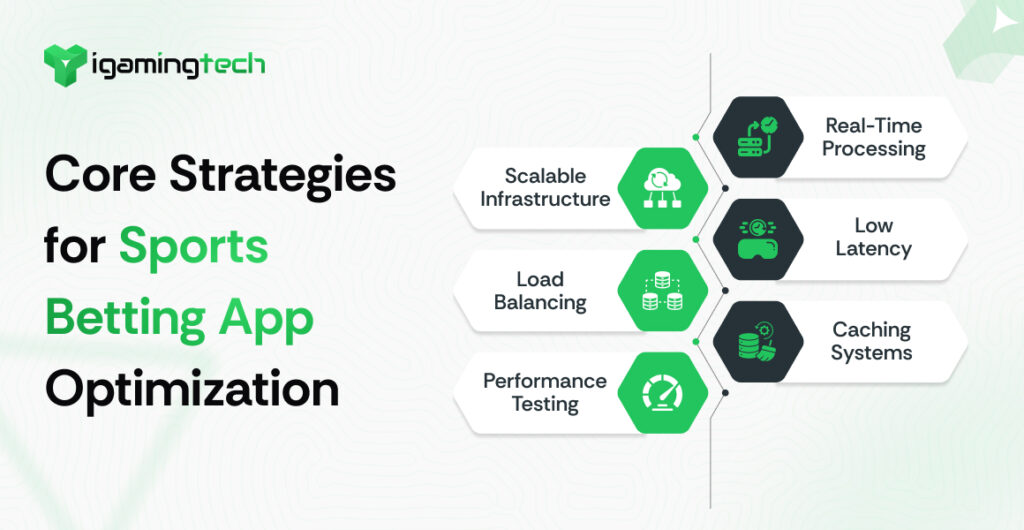
Handling peak match demand requires a strong foundation. Teams must focus on systems that scale fast and respond in real time. A well-planned approach improves sports betting app scalability and ensures stable performance during high traffic periods.
1. Scalable Infrastructure
Cloud-based systems help apps handle sudden traffic spikes. Resources adjust based on demand. This ensures the platform stays stable even during major sports events.
- Use cloud platforms that support auto scaling
- Allocate resources based on real-time demand
- Avoid fixed capacity systems during peak traffic
- Ensure high availability across regions
2. Real-Time Processing
Live betting depends on instant data updates. Systems must process data without delay. Faster updates help users place bets with accurate information.
- Use event-driven architecture for faster updates
- Process live odds without delay
- Sync match data in real time
- Reduce processing lag in backend systems
3. Load Balancing
Traffic must be distributed across multiple servers. This prevents overload on a single system and its failure. Balanced traffic flow improves reliability and uptime.
- Distribute user requests across servers
- Prevent single-point system failure
- Use intelligent traffic routing
- Maintain consistent app performance
4. Low Latency
Speed plays a key role during live betting. Systems must reduce the delay in every action to improve the speed. Faster response improves user satisfaction and engagement.
- Optimize API response time
- Reduce network delays across systems
- Improve data transfer speed
- Ensure fast bet placement flow
5. Performance Testing
Testing under high load conditions helps identify weak points. Teams can fix issues before real traffic hits the system. This improves overall sports betting app performance during peak moments.
- Simulate peak match traffic scenarios
- Identify system bottlenecks early
- Test app under real load conditions
- Improve system readiness before events
6. Caching Systems
Caching improves speed by reducing repeated data requests. It helps deliver faster responses during high-traffic periods and improves overall system efficiency.
- Store frequently used data in cache
- Reduce load on backend systems
- Deliver faster content to users
- Improve response time during peak demand
How to Improve Sports Betting App User Experience During Live Matches
User experience plays a key role during live events. Users expect fast actions and smooth navigation. Any delay can lead to drop-offs. Teams must focus on improving sports betting app user experience to keep users active during high traffic moments.
1. Fast Navigation
Users should move across the app without delay. Clear layout and simple paths improve usability and reduce confusion. Quick access to key sections reduces friction. A smooth journey helps users place bets without hesitation.
- Reduce steps in the betting journey
- Keep menus simple and easy to access
- Optimize page load speed
- Ensure smooth transitions between screens
2. Simple Flow
The betting process should be quick and easy. Complex steps frustrate the users and increase the exit rate. A clear flow helps users act faster. Simplicity improves confidence during high-pressure moments.
- Minimize input steps for placing bets
- Use clear call-to-action buttons
- Reduce form fields during betting
- Ensure a quick confirmation process
3. Instant Updates
Live betting requires real-time data insights. Users expect instant changes in odds and match stats. Accurate updates help users make better decisions. Delayed data leads to missed opportunities for users.
- Sync live match data without delay
- Show real-time odds updates
- Avoid refresh lag in the interface
- Maintain data accuracy across screens
4. Mobile Optimization
Most users access betting apps on mobile devices. The app must perform well across all screen sizes. A responsive design improves usability on the go. Mobile speed plays a key role in user retention.
- Optimize design for mobile screens
- Ensure fast load time on mobile networks
- Maintain a consistent layout across devices
- Improve touch interaction and usability
5. Error Handling
Errors must be clear and easy to understand. Users should know what went wrong and how to fix it. Clear guidance reduces frustration. Quick recovery keeps users engaged during live sessions.
- Show clear error messages during failed bets
- Provide retry options without losing data
- Avoid technical language in error prompts
- Ensure quick recovery from failed actions
6. Personalization
Personalized experience improves engagement and retention. Users prefer content that matches their behavior. Relevant content keeps users active longer. Tailored suggestions improve betting interaction.
- Show relevant matches based on user activity
- Highlight preferred sports and leagues
- Provide custom betting suggestions
- Improve content relevance for each user
Role of Scalable Architecture in Handling Traffic Spikes
A strong system design helps apps handle sudden demand. Traffic spikes during major events can overload weak systems. A scalable setup ensures smooth performance under pressure. This is where sports betting app scalability becomes essential for stability.
Modern apps use flexible architecture to manage load. Systems break into smaller services to handle specific tasks. This approach improves speed and reduces failure risk. It also allows teams to scale only the required parts during peak traffic.
- System Breakdowns → Modular Design: Large systems often fail when one part crashes. A modular setup divides the system into smaller parts. Each part works independently and reduces overall risk.
- Traffic Surges → Auto Scaling: Sudden spikes create a heavy load on servers. Auto scaling adjusts resources based on demand. This keeps the system stable during peak match moments.
- Single Server Risk → Distributed Systems: A single server cannot handle a massive load. Distributed systems spread traffic across multiple nodes. This improves uptime and reliability.
- Slow Data Access → Optimized Data Flow: Delayed data slows down betting actions. Efficient data management improves speed and accuracy. This supports real-time system performance.
Importance of Real-Time Performance in Live Betting Apps
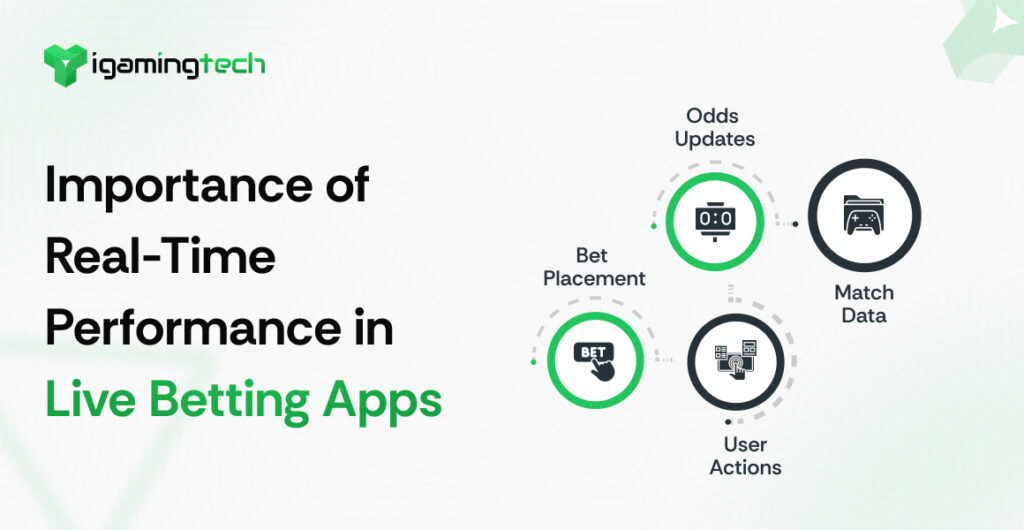
Every second matters during the match as live bets run on speed. Users make decisions based on live updates. A delay can change the outcome of a bet. This makes live betting app performance critical for user trust and engagement.
Systems must process data without delay, as the odds change quickly based on match events. Users expect instant updates and fast execution. A slow system creates confusion and reduces confidence. Strong sports betting app performance ensures users get accurate data at the right time.
1. Bet Placement
Users expect instant confirmation after placing a bet. Delays create confusion and lead to repeated actions. Fast execution improves trust and keeps the betting flow smooth.
2. Odds Updates
Odds change rapidly during live matches. Users rely on accurate updates to make decisions. Any delay can result in incorrect bets and a poor experience.
3. Match Data
Live match data guides user behavior. Real-time updates help users react quickly. Delayed information reduces confidence and affects engagement.
4. User Actions
Every interaction should feel instant. Slow response can frustrate users during high-pressure moments. Fast actions improve overall experience and retention.
Best Practices to Optimize Sports Betting Apps for Major Events
Major sports events bring high user demand. Systems must be prepared before traffic peaks. Teams need a clear plan to manage performance and stability. A structured approach helps improve system readiness during critical moments.
Preparation before the event is important. Teams must predict traffic patterns and system load. Early planning reduces last-minute issues and improves system readiness.
Continuous monitoring helps track system performance. Teams can identify issues in real time and fix them quickly. This prevents downtime during peak match traffic.
Backend systems handle most of the load. Strong backend setup ensures smooth data flow and fast response. This improves overall sports betting app performance during high demand.
Fast response time improves user trust. Systems must reduce delays in every action. Speed plays a key role in user retention during live betting.
Testing under peak conditions helps identify weak areas. Teams can fix issues before real traffic hits the system. This improves reliability during major events.
Regular updates improve system performance and stability. Teams can fix bugs and enhance features before peak traffic periods.
Build a Scalable Betting Platform for Live Match Demand. —Schedule a Call!
Contact UsFuture Trends in Sports Betting App Optimization
Technology continues to evolve in the betting industry. New tools and systems are improving how apps handle demand. Businesses must stay updated to remain competitive. Future-focused strategies will shape how teams approach sports betting app optimization in the coming years.
1. AI Integration
Artificial intelligence helps analyze user behavior and betting patterns. It improves decision-making and supports better system response during peak moments. AI systems can predict demand and adjust performance in advance.
- Analyze user betting behavior in real time
- Predict traffic spikes before major events
- Improve system response during peak load
- Enhance decision-making with data insights
2. Real Time Analytics
Track user activity on the app and system performance for better optimization. Teams can monitor traffic and make quick adjustments. This helps maintain stability during high-demand periods.
- Monitor system performance continuously
- Track user activity across sessions
- Identify performance issues instantly
- Improve response during peak traffic
3. Personalized Experience
Apps are moving toward user-specific experiences. Systems recommend matches and betting options based on behavior. This improves engagement and keeps users active for longer sessions.
- Recommend relevant matches to users
- Show user-specific betting options
- Improve engagement through personalization
- Increase session duration
4. Cloud Evolution
Cloud technology continues to improve scalability and speed. Modern cloud systems support flexible resource allocation. This helps apps handle traffic spikes with better efficiency.
- Enable flexible resource scaling
- Improve system speed and uptime
- Support high traffic demand easily
- Reduce infrastructure limitations
5. Automation Systems
Automation reduces manual effort in managing systems. It helps maintain performance and reduces human error. Automated systems improve consistency during peak match traffic.
- Automate system monitoring tasks
- Reduce manual intervention
- Improve operational efficiency
- Maintain consistent performance
Conclusion
Major sports events push systems to their limits. Apps must handle sudden user spikes without failure. Strong system design helps maintain stability during critical moments. Teams that plan and test in advance build platforms that perform under pressure.
A structured approach improves accuracy and user trust. This also strengthens live betting app performance during active match sessions. Reliable systems support smooth betting flow and reduce user frustration.
Focused execution helps teams stay ahead. Platforms that deliver stability and smooth interaction create a better betting experience and retain users longer.
Ready To Build Your Own Sportsbook Platform?
Launch a secure, scalable, and fully integrated sportsbook designed to grow your business faster.


